Thursday, August 29, 2013
Dorie Ann Ladner and Dr. Joyce Ann Ladner, March on Washington - MOTM
1963 was a momentous year for the Civil Rights Movement. Sit-ins, Freedom Rides, and voter-registration campaigns merged to galvanize people for the historic March in Washington on August 28. As two sisters from Mississippi— Dorie Ann and Joyce Ann Ladner—worked to prepare for the March, they realized there was a far reach of supporters for the Movement—from the unnamed every day person to internationally renowned entertainers. But before these 19 and 20-year-old sisters could immerse themselves fully in the Movement, they would have to overcome the emotion that accompanied the catastrophic news they received about a long time acquaintance.

Friday, August 2, 2013
Phil Hutchings - Moments of the Movement
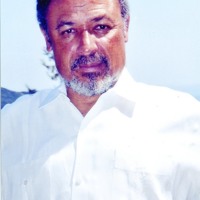
While working toward similar goals of racial respect and human dignity, the paths various civil rights organizations took to achieve these goals sometimes varied—occasionally within the same organization as leadership and philosophies evolved. The Student Nonviolent Coordinating Committee or SNCC (pronounced SNICK) epitomized this evolution. Beginning in the 1960s as an interracial group advocating nonviolence, SNCC shifted its focus to political activism and later in the decade to black militancy. SNCC member Phil Hutchings recalls how his civil rights training helped saved his life years after he had adopted SNCC’s militant position.
Purcell Conway - Moments of the Movement
Young people played a key role in the civil rights movement. For some, their involvement came as an objection to their parents’ various fears. For a young Purcell Conway, his involvement was a family affair. In the Conway household, an arrest in pursuit of civil rights was an investment for the future and a badge of honor. As Conway would discover, the fight for racial justice would lead to some unexpected findings and to equally unanticipated allies.
Carrie Young - Moments of the Movement
When a group of black college students refused to leave a segregated Woolworth's lunch counter in 1960 after being denied service, they ignited a groundswell of sit-ins across the South. These collective sit-ins led to the creation of the Student Nonviolent Coordinating Committee, or SNCC ("snick"). Making its way to Arkansas in the 1960s, SNCC (snick) found a committed worker in teenaged Carrie Young. But even Young’s devotion had not prepared her for the illiteracy she would find among the residents as she worked to organize them to vote. Neither was Young expecting that SNCC would lead her to a forbidden love.
Alfred Moldovan - Moments of the Movement
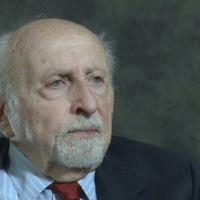
With the physical safety of civil rights workers at stake, it was imperative that trained medical practitioners be on hand during protests. The Medical Committee for Human Rights served that purpose. Dr. Alfred Moldovan, a founding member of the group, was there to treat protesters at the scene of one of the most disturbing incidences of violence during the movement as SNCC workers crossed the Edmund Pettis Bridge. Here, he describes the scene and how he tried to prepare workers to protect themselves during future protests.
Freeman Hrabowski 2 - Moments of the Movement
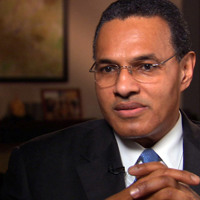
The bombing of the 16th Street Baptist Church in Birmingham was a turning point in the Civil Rights Movement. But for Freeman Hrabowski, now president of the University of Maryland, Baltimore County, it was personal. The Birmingham native was part of the movement as a child, and knew Cynthia Wesley, one of the four girls killed that morning. Here, he explains how the events of that day and the aftermath not only forever changed him, but Birmingham as well, and eventually, the country.
Freeman Hrabowski - Moments of the Movement
With so much on the line, one might think that everyone in the Black community would be on the same page when it came to fighting for civil rights. But Birmingham native Freeman Hrabowski explains that many middle-class African-Americans worried that there could be serious consequences for families of protesters. Now the president of the University of Maryland, Baltimore County, Hrabowski was one of the few middle-class children who not only joined the protests, but was trained to lead and protect the younger children who were often the catalyst for change in the movement.
Subscribe to:
Posts (Atom)